Node.js Agency: building a fast, reliable back-end, delivered without delay (with Aventique)
Looking for a Node.js agency is not about looking for “JavaScript developers.” In practice, it means looking for a team capable of building a solid web product (API, back-office, SaaS, marketplace, app) — and above all, capable of delivering consistently. A web project moves forward when you can test early, fix quickly, and go to production without fear. Aventique operates precisely in this space: custom web development, API construction and refactoring, clean architecture setup, and a delivery-oriented way of working (short milestones, environments ready early, frequent demos, structured production releases).
The goal is straightforward: to give you a usable, maintainable, and scalable product — without creating technical debt that will cost you dearly six months from now.

Node.js: what exactly is it?
Node.js is a runtime environment that allows JavaScript to be executed server-side. Instead of writing JavaScript only for the browser, you also use it for the back-end: APIs, user management, data processing, integrations with external services, scheduled tasks, real-time features, and more.
Its popularity is not a matter of “trend.” It comes from its ability to efficiently handle large numbers of input/output operations (network requests, database queries, API calls, storage, email sending) thanks to an asynchronous, non-blocking model. On modern web projects, this often translates into good responsiveness, a clean architecture, and a direct mapping from business needs to API endpoints and back-end services.
Node.js integrates very well with the current ecosystem: Docker containers, cloud infrastructure, CI/CD, automated testing, observability, and modular architectures when needed. For a web product that must evolve quickly, it is a particularly practical foundation — as long as it is set up properly.
What to know before choosing Node.js for your project
A serious Node.js agency does not sell Node.js as a magic solution. It tells you when it is an excellent choice and when it is not the most coherent path. The question is not “is Node.js good?” The question is “is Node.js the right fit for this specific project, with these specific constraints?”
Node.js is often particularly relevant if your product relies on an API consumed by a website or mobile application, if you have integrations (payment, CRM, ERP, emailing, internal tools), if you need real-time capabilities (notifications, chat, live dashboards), or if your scope is going to evolve rapidly with frequent iterations.
The warning signs are classic but decisive. Performance is not automatic: without pagination, without indexes, without a reasoned caching strategy, a Node.js back-end can become slow just like any other. Code quality is a real concern: JavaScript allows both the best and the worst, which is why TypeScript, clear conventions, tests, and code reviews matter. Security must be addressed from the start: role management, strict input validation, secrets handling, CORS policies, and basic protections against web attacks. Finally, architecture matters: Node.js allows you to move fast, so you need to avoid the trap of “quick and messy.”
Aventique works precisely on this balance: delivering fast, yes, but keeping a clean technical foundation to avoid a forced rewrite in the short term.
The concrete advantages of Node.js for a web project
Node.js often makes it easier to build a consistent product, especially when the team works with JavaScript/TypeScript on both front-end and back-end. It reduces friction, standardizes tooling, makes it easier to share types and models, and keeps the logic more fluid between the interface and the server.
The Node.js ecosystem is also mature enough to support a genuine “product” approach. This is not just about creating routes. It means clear API documentation (OpenAPI/Swagger), unit and integration tests, data validation, robust authentication management, asynchronous jobs (queues) to avoid blocking the API on long-running processes, and observability to detect and fix production issues quickly.
Finally, Node.js has historically been very strong for I/O-heavy workloads and real-time use cases. If your application makes frequent calls to a database, external services, or storage, or if it needs to push live events, Node.js is often a very natural choice.
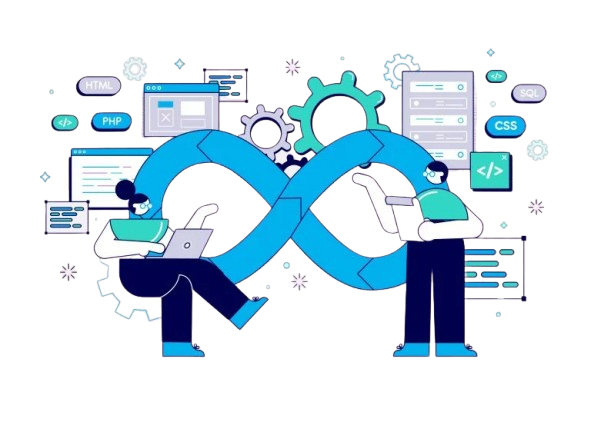
Key information for properly scoping a Node.js project
The first point is the actual V1 scope: what absolutely needs to be delivered for the product to be usable, and what can wait. The clearer this boundary is, the faster and more controlled the delivery.
The second point is the data structure: which objects exist (users, accounts, orders, content, events…), what relationships they have, and what business rules apply. A clean data model saves you from contortions and consistency bugs later on.
The third point is access management: who can do what? A Node.js project without well-defined role management almost always ends up accumulating exceptions, scattered conditionals, and security vulnerabilities.
The fourth point is operations: logs, monitoring, alerting, error handling. If you cannot see what is happening, you discover problems too late — usually after a user complaint.
Aventique helps you frame these elements from the start, because that is where the ability to deliver fast and hold up in production is won.
The steps of a Node.js project delivered efficiently with Aventique
A delivery promise only has value when the execution is concrete. Aventique favors an organization that reduces risk: deliver early, validate often, and keep the code maintainable.
Scoping begins with a rapid but serious understanding of the need: V1 scope, users and roles, critical business rules, constraints (GDPR, payment, information systems), and measurable success criteria. The goal is not to write an endless document, but to produce a batch-based roadmap that is useful for delivery.
Technical design is then handled pragmatically: framework and structure choices, data schema, authentication strategy, logging and monitoring strategy, deployment strategy. On most projects, a simple but well-structured architecture is preferable to premature complexity.


Delivery foundations are set up early: dev/staging/prod environments, CI/CD, code conventions, a test base, API documentation. This is a key point: without these foundations, you may be “progressing,” but you are not delivering cleanly.
Development then proceeds in batches, with regular demos. The aim is to avoid the tunnel effect. An API is delivered with its documentation, a user journey is testable, permissions are validated, and feedback is integrated quickly.
Stabilization and production release are structured: integration tests, input validation, permission checks, performance review (pagination, indexes, caching if needed), rollback plan, monitoring. A smooth production release is not “luck” — it is method.
After going live, the project moves into continuous improvement mode: quick fixes, evolutions, error monitoring, performance improvements, new feature additions. Aventique can continue to support this phase to maintain a stable delivery rhythm.

Why turn to Aventique as your Node.js agency?
A Node.js agency should not just “produce code.” It should help you ship a product that runs, can be tested, can be deployed, and can be maintained without pain.
Aventique places emphasis on delivery through short cycles. This drastically reduces the risk of discovering too late that the product does not match the real need. This approach relies on environments that are ready early, exploitable API documentation, and a regular demo rhythm.
Aventique also builds Node.js back-ends designed to last. This means a TypeScript foundation when relevant, strict data validation, tests where they matter, a readable architecture (modules, services), and deployment discipline. The payoff is simple: fewer bugs, fewer regressions, and a greater capacity to add features without “breaking everything.”
Aventique also takes a pragmatic stance on architecture. Highly sophisticated architectures can be useful, but they are often over-engineered from the start. The approach is to begin simple and robust, then evolve the structure when the product reality justifies it (volume, team size, complexity, isolation needs).
One final point, often underestimated: transparency. A project goes well when you know, at any moment, what has been done, what remains, what is blocking, and what is coming next. Aventique structures project tracking to eliminate grey areas.
Examples of projects where Node.js is a good fit
Node.js is particularly well-suited for building a SaaS MVP (authentication, onboarding, dashboard, billing), a marketplace (user management, listings, search, payment, moderation), a business back-office (permissions, workflows, exports, integrations), a real-time platform (live tracking, notifications, WebSockets), or a “core product” API consumed by a mobile application and a website.
In all these cases, the value is not “Node.js.” The value is clean execution: a stable, documented, testable, and deployable back-end.
FAQ: Node.js agency
Which Node.js framework to choose: Express, NestJS, Fastify?
The choice depends on the complexity and level of structure required. Express is simple and widely used. NestJS provides a strong structure, useful for more ambitious projects. Fastify is often appreciated for its performance and philosophy. The right choice is the one that serves your project — not the one that “sounds good.”
Is Node.js suitable for a high-traffic platform?
Yes, provided you have a solid data model, a clear architecture, serious operations (monitoring, scaling, caching), and maintainable code. Problems more often stem from a poorly structured foundation than from the technology itself.
Can Aventique take over an existing Node.js project?
Yes. A successful takeover starts with a technical audit, followed by securing the critical areas: code quality, tests, deployment, performance, and code organization. The goal is to get the project back on track without rewriting everything.
How long does it take to deliver a first version?
For a realistic V1 (authentication, core features, a simple back-office), the timeline is often measured in weeks when the scope is well defined and delivery is done in batches. Speed depends less on Node.js than on the clarity of the V1 and the delivery method.
PROJECT METHODOLOGY
Every project starts with an in-depth analysis phase. At Aventique, we take the time to understand your vision, your business challenges, and your user objectives.
This scoping step allows us to turn an idea into a structured, coherent, and realistic project.
We analyze your market, your target audience, your competitors, and your technological environment in order to define priority features, performance goals, and success metrics (KPIs).
Thanks to this strategic approach, we avoid unnecessary development and ensure a measurable return on investment.
Our deliverables at this stage:
A clear functional specification.
A prioritized product backlog.
A roadmap that frames the project across technical, functional, and budgetary dimensions.
This rigor from the outset ensures that every euro invested serves your vision and your digital growth.
A successful application stands out through its ergonomics and user experience.
Our UX/UI designers create intuitive, visually appealing interfaces that are consistent with your brand identity.
We place the user at the heart of the process — every interaction is designed to be smooth, efficient, and enjoyable.
The design process unfolds in several stages:
UX workshops to understand user journeys and define personas.
Interactive wireframes to visualize key screens.
High-fidelity UI mockups, created with industry-leading tools (Figma, Adobe XD).
User testing to validate ergonomic decisions before development begins.
Our goal: to deliver a beautiful, useful, and high-performing application that keeps your users engaged while reflecting your values.
Because a well-designed interface is more than just aesthetics — it is a driver of conversion and customer satisfaction.
We follow an agile methodology, which allows us to develop your application in successive stages while keeping you involved at every phase of the process.
In practice, this means:
Development organized into 1 to 3-week sprints.
Regular reviews where you test the delivered features.
Continuous backlog prioritization based on your needs and feedback.
Smooth communication through collaborative tools (Slack, Notion, Jira, etc.).
Our technical team, made up of senior developers specialized in Swift, Kotlin, React Native, and Flutter, guarantees clean, documented, and scalable code.
Every line is optimized for performance, security, and maintainability.
This agile approach gives you full visibility into the project’s progress and the flexibility to adjust priorities at any time — a major asset in a constantly evolving digital environment.
Once development is complete, it is time for the validation and testing phase.
Our QA (Quality Assurance) team implements a rigorous functional, technical, and UX acceptance process to ensure that every component of your application meets the initial requirements.
We carry out:
Unit tests and integration tests to verify code stability.
Performance tests to ensure the application is fast across all devices.
Multi-device and multi-OS tests (iOS, Android, tablets, various OS versions).
Security audits to protect your data and your users’ data.
User tests to refine the final ergonomic details before launch.
Nothing is left to chance: the application is only delivered once it meets our highest quality standards.
The result: a stable, smooth, and secure app, ready to impress your users from day one.
Launching an application does not stop at going live.
At Aventique, we support you beyond publication to ensure the visibility, performance, and longevity of your project.
We handle:
Submission to the App Store and Google Play Store.
ASO (App Store Optimization) to improve visibility and download numbers.
Analytics tracking (downloads, crash reports, user feedback).
Evolutionary updates based on real-world feedback and new OS versions.
Corrective and preventive maintenance to ensure long-term stability.
Our goal is to build a lasting partnership.
We stay by your side to evolve your application, enrich its features, and adapt it to your new needs.
Because a high-performing application is not a static product — it is a living project that grows alongside your business and your users.


KEY FIGURES
Team members
Projects delivered
Years in business