Custom Web Development
Custom web development consists of creating a web solution specifically designed for your business, your users, and your constraints (industry, security, performance, integrations). Unlike a “standard” site or a conventionally used CMS, custom-made solutions allow for the design of tailored features, the industrialization of your processes, and the delivery of a scalable application that remains maintainable over time.
Aventique designs and develops custom websites and web applications, from the scoping phase to production, followed by maintenance and evolution. Our approach is pragmatic: starting from your business objectives, translating your needs into simple user journeys, and then delivering a robust, tested, and exploitable solution.
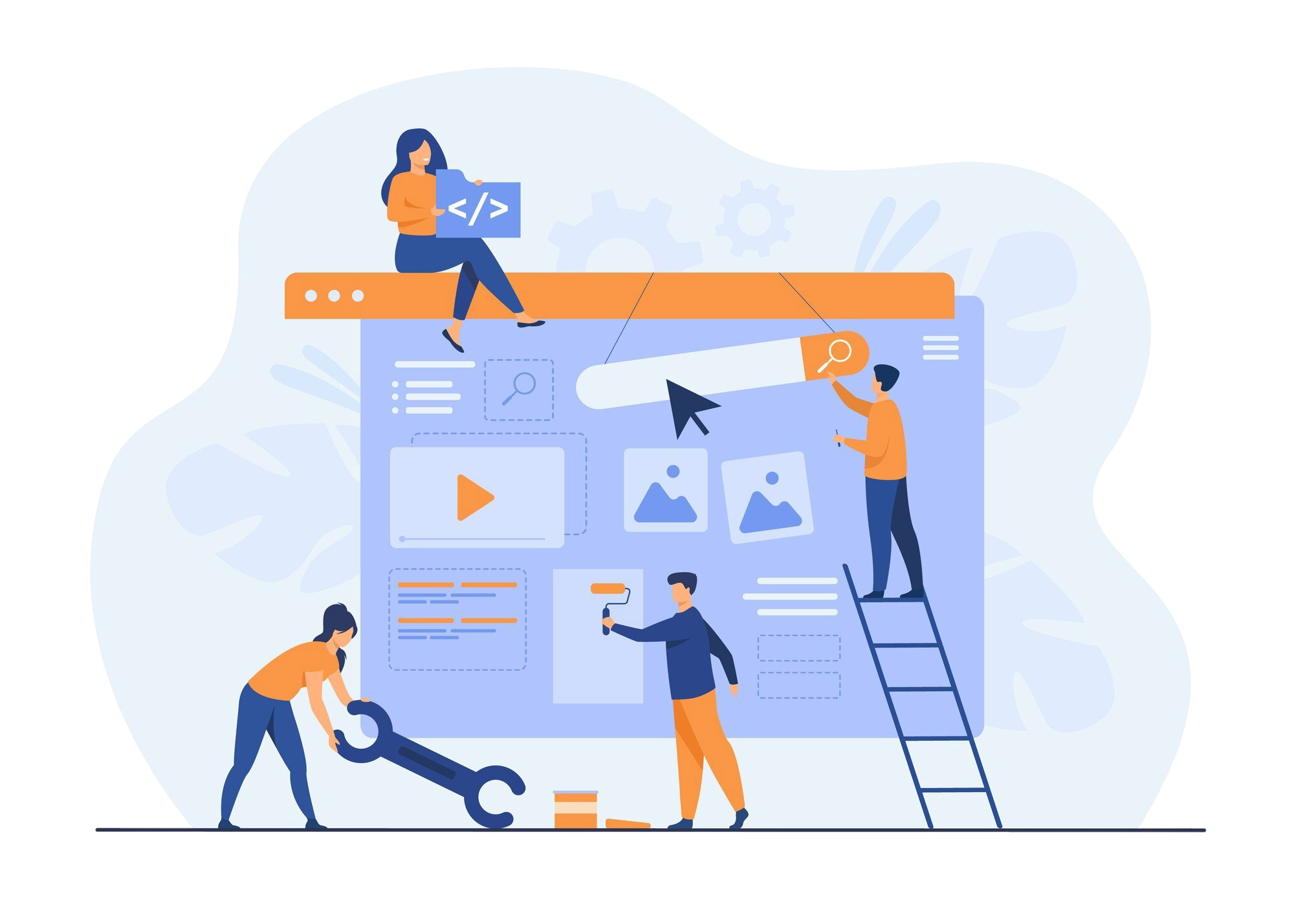
What is custom web development?
A custom web project can take many different forms depending on your needs, whether developed in-house or via IT outsourcing:
- a business web application (internal tool, back-office, management, “light” CRM/ERP),
- a client portal or extranet (secured access, tracking, documents, workflows),
- a SaaS platform (subscriptions, multi-account, roles and permissions),
- a marketplace or matchmaking platform,
- a high-constraint site (performance, SEO, customization, integrations),
- an e-commerce site requiring specific business rules.
The common point: the solution is designed around a precise functional scope, with a suitable technical architecture and a logic for evolution. We don’t “tinker” with an addition of plugins: we build a coherent web product.
When to choose custom over a CMS?
A CMS (WordPress, Webflow, Shopify, etc.) can be very relevant for certain projects: showcase sites, content, standard e-commerce, rapid needs, and tight budgets. But it quickly reaches its limits when:
- you have specific business rules (pricing, quotes, rights, workflow),
- you need to integrate multiple building blocks (CRM, ERP, PIM, payment, SSO…),
- you have high performance requirements (loading time, scalability),
- you want a product that evolves frequently (product roadmap, rapid iterations),
- security and governance are critical (rights, data, auditability),
- the user experience requires an advanced “app-like” interface.
In these cases, custom web development allows you to go further, with a cleaner and more sustainable solution, and a better-managed total cost of ownership over time (fewer workarounds, less technical debt, more control).
What Aventique does on a custom web development project
Understanding needs and scoping (Discovery)
Before developing, we clarify exactly what needs to be built. This is often the most cost-effective phase: good scoping avoids scope creep and unsuitable technical choices.
Concretely, we perform:
- scoping workshops (objectives, users, constraints, journeys),
- formalization of needs in the form of a backlog (user stories),
- definition of an MVP if necessary (prioritization by value),
- realistic estimation and planning (milestones, batches, dependencies),
- proposal of a technical strategy (stack, architecture, hosting, security).
This step allows all stakeholders to align: business, product, technical.
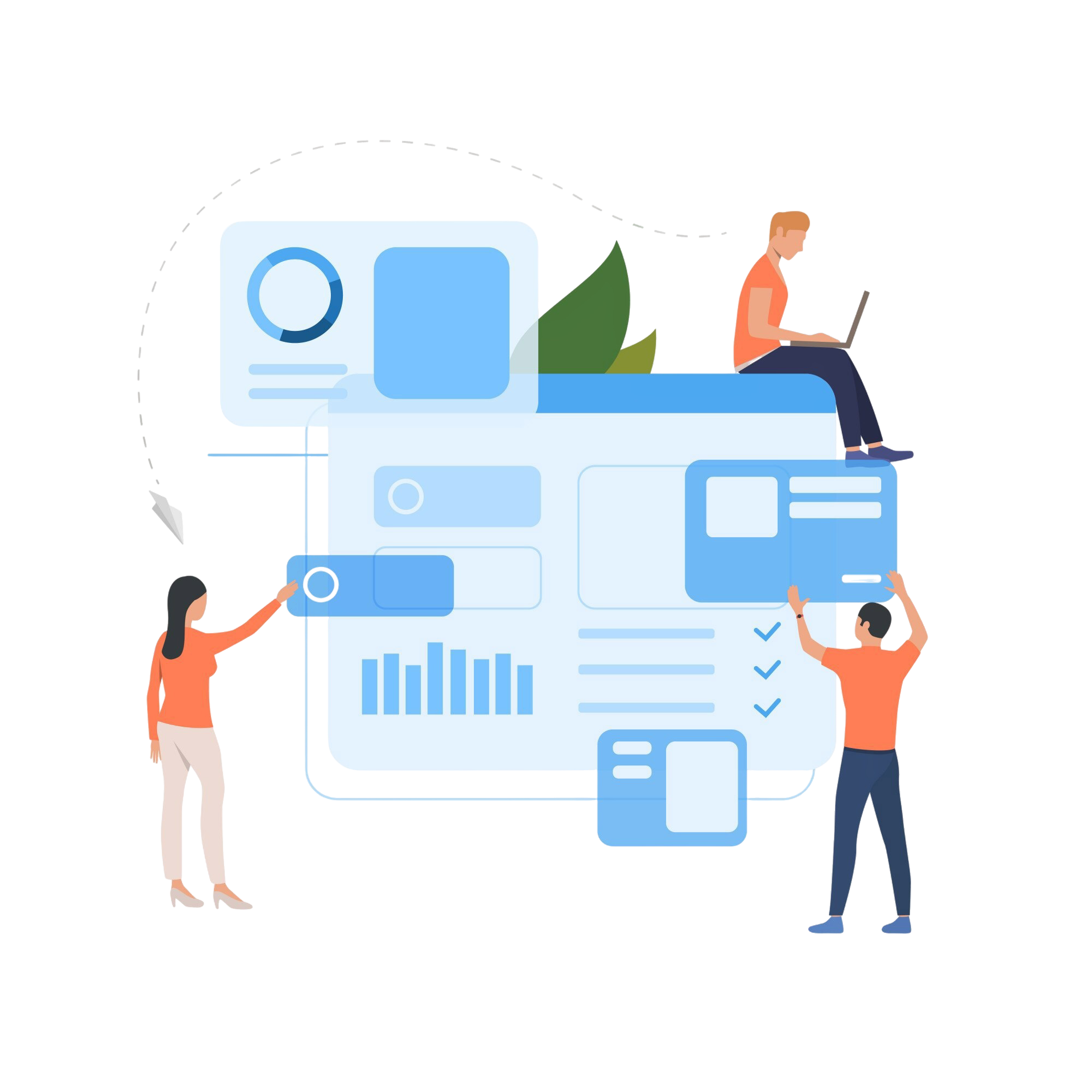
UX/UI Design and Prototyping
Custom-made is particularly effective when the interface truly matches the usage. A web application can be technically perfect but unusable if the journeys are poorly thought out.
Aventique takes care of:
- UX (journeys, sitemap, wireframes),
- UI (mockups, design system if needed),
- prototyping (validation with business teams),
- interaction rules (states, errors, micro-journeys).
Result: we validate the experience before investing in code, which accelerates delivery and reduces late feedback.
Web Development: Frontend, Backend, and Integrations
Custom development generally involves a complete foundation:
- Frontend: user interface (web app, dashboard, client area).
- Backend: business logic, data management, APIs integration.
- Integrations: connecting to your Information System (CRM, ERP, payment, emails, analytics, etc.).
Aventique develops web applications with modern technologies adapted to the context:
- Frontend: React, Vue, Angular (depending on needs).
- Backend: NestJS/Node, PHP (Laravel/Symfony), Java (Spring Boot), C# .NET.
- APIs: REST/GraphQL according to case.
- Cloud/DevOps: AWS, GCP, Azure; GitHub/GitLab/Bitbucket; CI/CD.
We look for a balance between performance, scalability, ease of maintenance, and delivery capacity.

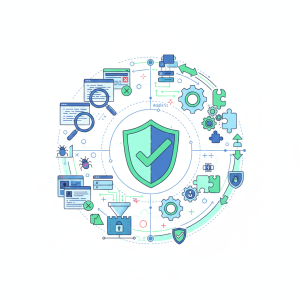
Quality, Testing, and Security
In a custom project, quality must not be “the last step.” It must be integrated into the cycle.
We implement:
- testing strategy (functional, regression, according to criticality),
- code reviews and quality rules,
- environments (dev / staging / prod),
- error management and logging mechanisms,
- security best practices (auth, permissions, endpoint protection, secret management).
The goal: deliver a stable product and avoid stressful production releases.
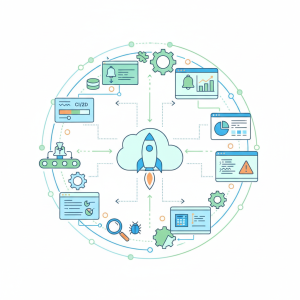
Deployment and Operations
Production release is a critical point: this is where many projects fall behind if preparation is not anticipated.
Aventique supports:
- environment configuration,
- deployment (CI/CD pipeline if relevant),
- migrations, version management,
- post-go-live monitoring (stabilization, quick fix),
- handover (documentation, access, best practices).
Maintenance, AMS and Evolutions
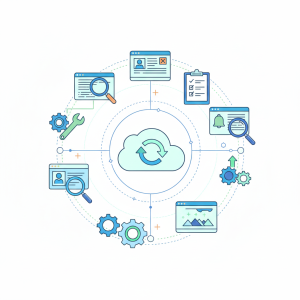
A custom product is alive. AMS (Application Maintenance Services) guarantees continuity and allows for iteration.
Aventique offers:
- corrective maintenance (bugs),
- evolutive maintenance (new features),
- security updates,
- support on the product roadmap (prioritization, releases).
Our delivery methodology: securing the project and delivering fast
For custom web development, the method must be clear and manageable. Our operations aim to reduce risk: deliver regularly, validate early, adjust fast.
Step 1 — Scoping and MVP
We define a useful and quickly deliverable scope without sacrificing the architecture.
Step 2 — Development Sprints
Delivery by iterations (often 1 to 2 weeks) with:
- regular demonstrations,
- tracking meetings,
- quick arbitrations on the backlog,
- continuous quality control.
Step 3 — UAT and Stabilization
Before production release:
- functional User Acceptance Testing (UAT),
- non-regression testing if necessary,
- quick fixes,
- preparation for deployments.
Step 4 — Go-live and Continuous Improvement
After production release:
- monitoring,
- stabilization,
- progressive enrichment (features, performance, UX).

Examples of typical custom use cases
Here are frequent examples of projects where custom-made is relevant, and what we build in each:
Business web application / Back-office
- internal process management,
- workflows (validation, statuses, logging),
- role-based permission management,
- exports, reporting, dashboards,
- integrations with CRM/ERP.
Client portal / Extranet
- secured authentication,
- access to documents, contracts, invoices,
- case tracking, tickets, requests,
- notifications and history.
These examples help quickly define whether your needs fall under a well-configured CMS or a necessary custom build.
SaaS Platform
- multi-tenant (multiple clients),
- billing / subscriptions,
- fine permission management,
- scalable product features.
E-commerce with specific business rules
- complex catalog,
- pricing by segment,
- logistics / ERP integrations,
- personalized journeys.
Technologies: how to choose the right stack?
Choosing the stack is not a technology contest. It must meet concrete criteria:
- nature of the product (marketing site, business app, SaaS),
- performance and scalability requirements,
- level of integrations,
- in-house skills (if you are taking over a part),
- security and compliance constraints,
- time-to-market objectives.
Aventique advises you on the trade-offs and documents technical decisions. The goal is to build a solid foundation without unnecessary over-architecture.
SEO and Custom-made: an advantage if anticipated
Custom development can be excellent for SEO if thought out correctly: template structure, tagging, performance, rendering (SSR/SSG if relevant), URL management, internal linking, pagination, and loading time optimization.
If your project has a visibility stake, Aventique integrates these elements from the design stage, to avoid web redesigns “that break SEO” or visually performing but ineffective sites on Google.
Why Aventique for your custom web development?
Aventique positions itself as a delivery partner: a team capable of scoping, designing, developing, deploying, and maintaining a web solution over the long term.
You benefit from:
- a structured approach (scoping, UX/UI, dev, QA, production release),
- reasoned technical choices (maintainability and scalability),
- the ability to adapt to the collaboration mode (fixed-price, agile, staff augmentation),
- a high standard of delivery quality (tests, processes, operations),
- continuity through maintenance and continuous improvement.