Aventique, Website Redesign Agency
A website redesign is not just a “makeover.” It is a strategic project that impacts brand image, commercial efficiency, technical performance, SEO visibility, and often internal organization (content, tools, back-office, publishing processes). A successful redesign must be managed like a product project: starting from measurable objectives, auditing the existing site, designing a better experience, rebuilding the technical foundation, preparing the migration, then launching without loss (or with as little loss as possible) and improving post-launch.
Aventique is a website redesign agency that supports its clients from A to Z: scoping, UX/SEO audits, UI/UX design, development, integrations (CRM, forms, analytics), migration preparation, testing, production launch, then maintenance and evolutions. Our approach aims for a concrete result: a clearer, faster, more visible, and more efficient site for your users and your business.

Client Reviews

Djamel Zahal, through his company Aventique, has done excellent work and been very professional in his various assignments for Moneyweb. I highly recommend his services.
Carim Joomun
Deputy General Director - MoneyWeb (NextRadioTV)

Top CEO, top team. We had the opportunity to develop our BYMOV application with them, and the developers delivered. Well done!
Farid Sayad
CEO & Founder - BYMOV

I have worked with Djamel and his team on several occasions, and they are a highly professional team of mobile experts.
Vincent Vainunska
Digital strategy & innovation - Adidas

We have enjoyed an excellent working relationship with Aventique, with whom we have been working directly for over a year. We are very pleased with the value delivered by their consultants/developers on our e-commerce app.
Alexis Marçais
Director of IT E-Commerce & CRM (EME) - SEPHORA
Why redesign a website
The reasons for a redesign are often cumulative. A site may “work” but still hinder growth.
Common motivations:
- Improve conversion rate (contacts, quote requests, sales);
- Modernize the interface and strengthen brand credibility;
- Fix technical issues (slowness, security, instability, technical debt);
- Restructure the offer and clarify the brand message;
- Prepare for evolution (new CMS, new design system, headless, multi-language);
- Resolve SEO problems (traffic drop, indexing, duplication, inconsistent architecture);
- Make the site more autonomous (back-office, page templates, publication workflow).
A redesign is relevant when “small tweaks” are no longer enough, or when the current structure prevents reaching objectives.

What Aventique does for a website redesign
A redesign agency must master three dimensions simultaneously: experience (UX/UI), technology (development, performance, security), and visibility (SEO, tracking). Aventique intervenes throughout the entire cycle, with concrete deliverables at each phase.
Specifically, we perform:
- Audit of the existing site (UX, content, SEO, technical, performance);
- Definition of the redesign strategy (objectives, user journeys, architecture, priorities);
- UX/UI design (wireframes, mockups, prototyping);
- Web development (showcase site, CMS site, webapp, landing pages, components);
- Integrations (forms, CRM, marketing tools, analytics, tags);
- SEO migration (URLs, 301 redirects, canonicals, sitemaps, verifications);
- Testing and launch;
- Post-production monitoring (stabilization, corrections, optimizations);
- Maintenance (corrective, evolutionary, security).


Website Redesign: Our Step-by-Step Methodology
Scoping: Objectives, Scope, and Indicators
A redesign begins with clear alignment. Without scoping, you simply rebuild a “prettier” site without improving efficiency.
We define:
- Business objectives (leads, sales, recruitment, awareness);
- Targets and intent (who visits the site, to do what);
- Priority pages and user journeys;
- Constraints (CMS, hosting, internal tools, resources);
- Success KPIs (conversion, speed, SEO, engagement, forms, etc.);
- Planning and governance (follow-up points, validations, owners).
Recommended deliverable: A scoping document + a redesign roadmap (milestones, phases, dependencies).


SEO Audit: Securing the Redesign and Building the New Architecture
SEO is one of the major risks of a redesign. A poorly prepared migration can significantly degrade organic traffic.
We audit:
- Pages generating traffic and conversions (to preserve / improve);
- Queries and intent (what users are actually searching for);
- Current structure (depth, linking, orphan pages, duplication);
- Indexing (indexed pages, excluded pages, inconsistencies);
- Performance (weight, scripts, images, CWV if available);
- Content (quality, gaps, cannibalization, opportunities).
Deliverables:
- Conservation / optimization plan for strategic pages;
- Recommendations for new sitemap (pillar pages, service pages, local pages if needed, resources);
- List of pages to create, merge, delete, or redirect.
UX and Content Audit: Improving Understanding and Conversion
A redesign must improve user experience; otherwise, the ROI is limited.
We work on:
- Clarity of the value proposition;
- Information hierarchy (what is seen, when, and why);
- Friction in user journeys (from entry page to action);
- Consistency of messages by target audience;
- Editorial structure (headings, proof, reassurance, CTA);
- Mobile compliance (readability, buttons, forms, accessibility).
Recommended deliverable: UX diagnostic + journey recommendations + content plan (sections to add, pages to enrich).

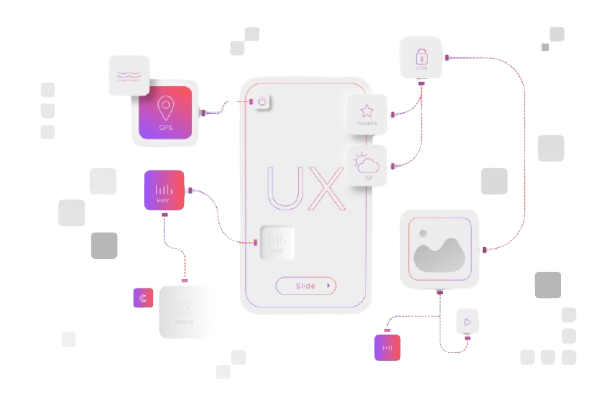
UX/UI Design: Wireframes, Mockups, Design System
Design serves to validate journeys before development.
We produce:
- Wireframes (page structure, blocks, priorities);
- UI Mockups (branding, typography, components, states);
- Prototypes (rapid validation, iteration);
- Light design system (reusable components) if relevant.
Objective: Accelerate development, avoid discrepancies, and guarantee overall consistency.
Development: CMS, Custom, or Hybrid
Aventique adapts the solution to the context rather than imposing a default choice.
Typical cases:
- CMS-based redesign (WordPress, Webflow, others) for showcase or content sites;
- E-commerce redesign (Shopify, WooCommerce, others) based on needs;
- Custom redesign (front + back) when there is business logic, integrations, a specific back-office, or high requirements;
- Hybrid approach: CMS for content + custom components for critical parts.
We focus specifically on:
- Performance (image weight, loading, scripts, cache);
- Maintainability (structure, components, documentation);
- Security (updates, best practices);
- Editorial (page templates, fields, reusable blocks).


Tracking and Data: Measuring Before and After
A redesign must preserve the ability to measure and improve.
We secure:
- Analytics (GA4 or other), events, conversions;
- Tagging plan if necessary;
- Forms and CRM feedback (HubSpot, Salesforce, etc., depending on context);
- Marketing pixels (if used);
- Compliance (consent banners / CMP, if applicable).
Recommended deliverable: Tracking plan + post-launch compliance check.
Migration Preparation: The Heart of “SEO Risk”
This is often where success is decided.
We prepare:
- URL mapping (old → new);
- 301 redirects (no chains, no errors);
- Canonicalization rules;
- Management of deleted / merged pages;
- Sitemaps, robots.txt, meta directives;
- Internal link checking (avoid links to old URLs);
- Preparation of an SEO testing plan before and after launch.
Deliverables: Mapping file, redirect list, migration checklist.

Testing and Production Launch
Before going live:
- Functional testing (forms, CTAs, journeys);
- Responsive testing (mobile/tablet/desktop);
- Performance testing;
- SEO testing (indexability, tagging, redirects, canonicals, sitemaps);
- Tracking verification.
Launch:
- Launch window;
- Immediate controls (server errors, redirects, critical pages);
- Monitoring during the first few days.
Post-Launch Monitoring: Stabilize, then Optimize
The redesign doesn’t end at go-live. The best progress is often made in the following 4 to 8 weeks.
We track:
- Indexing and coverage;
- 404/500 errors, redirect anomalies;
- SEO variations (queries, pages, CTR);
- Real-world performance;
- User behavior (conversion, journeys, exit pages).
Then we iterate:
- Content optimizations;
- UX improvements;
- Semantic enrichments;
- New pages based on opportunities.

Concrete Deliverables to Expect from a Redesign Agency
Depending on the scope, here are typical deliverables that Aventique provides (or co-produces with your teams):
- Scoping document (objectives, KPIs, scope, planning);
- SEO / UX / Technical audits (prioritized);
- Target sitemap + content plan;
- Wireframes + UI mockups + prototype;
- Development backlog/tickets;
- Templates and components (service pages, content pages, landing pages, etc.);
- URL mapping + redirects + migration checklist;
- Testing (functional + SEO + performance);
- Tracking plan + post-production verification;
- Post-launch monitoring + optimization plan.

How long does a website redesign take
Timelines vary based on:
- Number of pages and templates;
- UX/UI complexity;
- Technology (simple CMS vs custom);
- Migrations (languages, SEO, content, third-party tools);
- Team availability (validation, content).
Pragmatic benchmarks (indicative):
- “Simple” showcase redesign: A few weeks to 2–3 months;
- Redesign with significant content + SEO + several templates: 2–4 months;
- Redesign with custom work / integrations / multi-language: 3–6 months and more.
The most robust approach often consists of phase-based delivery: redesigning the core + priority pages, followed by extension.
How much does a redesign cost (and what determines the budget)
Main factors:
- Scope (pages, templates, features);
- UX/UI (design system, level of finish);
- Technology (CMS vs custom, integrations, security);
- SEO migration (URL volume, complexity, multilingual);
- Content (rewriting, creation, optimization);
- Maintenance and post-launch monitoring.
Aventique recommends a structured estimation by phases, with an MVP or a “refreshed core” if the situation allows. This secures the budget and accelerates the launch.

Why choose Aventique as your website redesign agency
A redesign requires a high level of execution: a site can be visually successful but ineffective if it loads slowly, loses its SEO, or does not convert. Aventique positions itself as a partner capable of managing the whole process with a delivery-oriented approach.
You benefit from:
- A clear method (audit → design → dev → migration → optimization);
- An ability to manage redesign SEO challenges (mapping, redirects, indexing);
- UX/UI work focused on conversion, not just design;
- Reliable technical execution (performance, maintainability, security);
- Post-launch support (stabilization, evolutions, maintenance).
FAQ - Website Redesign Agency
Does a redesign always cause SEO loss?
No, but the risk is real if the migration is poorly prepared. A redesign can also significantly improve SEO if the architecture, content, and performance are optimized, and if redirects are managed correctly.
Should I change CMS during a redesign?
Not necessarily. You change CMS if the current one hinders performance, editorial autonomy, security, or evolutions. Otherwise, a redesign can be carried out on the same CMS by improving structure and templates.
How to avoid a 'beautiful but ineffective' redesign?
By setting KPIs, auditing existing data, prioritizing journeys that convert, and measuring after launch (tracking + iterations).
Can Aventique handle content?
Yes, depending on your organization: recommendations, page plans, SEO optimization, or even production if the setup is planned. The goal is to have a coherent site, not a collection of mismatched pages.